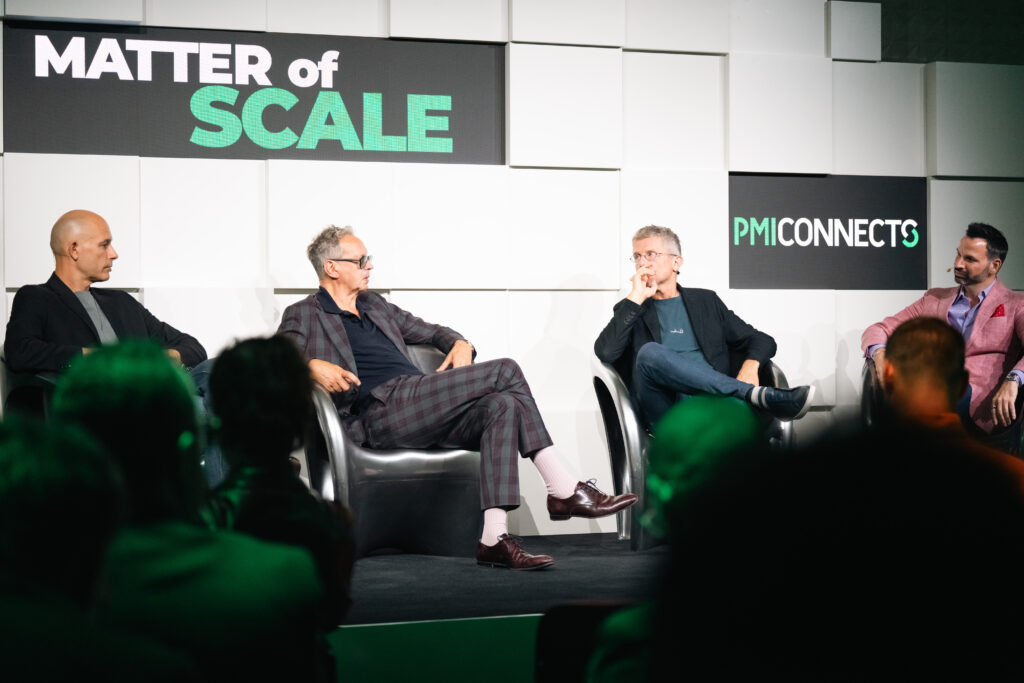
Milan, a city synonymous with elegance, innovation, and unrelenting style, played host last week to PMI Connects’ “Matter of Scale” keynote at the iconic Gallia Hotel. The city itself seemed to pulse with energy in anticipation of the approaching Monza Formula 1 Grand Prix, its streets alive with speed, precision, and creativity. Inside the hotel, PMI executives, business partners, and leading media gathered in an atmosphere charged with curiosity, dialogue, and ambition, ready to explore how design can transform not only products but experiences, cities, and human behavior itself.
The Gallia’s grand hall, bathed in natural light, became a stage for three visionaries, each presenting radically different perspectives on design as a transformative force. From subtle, human-centered innovation to bold architectural experimentation, the keynote illustrated that design is not simply about aesthetics. It is about shaping lives, influencing behavior, and quietly moving the world forward.
Massimiliano La Rovere: Subtlety in Motion
PMI’s VP of Design, Massimiliano La Rovere, opened with a reflection on the power of design to shape human experience. “We find comfort in predictability,” he said, “but true transformation comes from balance, between responsibility, elegance, and purpose.” La Rovere shared how PMI’s portfolio of smoke-free products, including the IQOS Iluma, exemplifies this philosophy. These devices, he explained, are designed to blend technology, innovation, and human-centered thinking into a seamless experience. They are neither loud nor ostentatious. They work quietly, guiding change, fostering trust, and offering a glimpse into a future where design supports meaningful, long-term connections between people and products.
He invited the audience to consider design as an act of subtle influence, something that does not demand attention but quietly enhances everyday life. In the room, executives and media alike could see how this philosophy extended beyond a single product. It was a mindset, a guiding principle that shapes every element of PMI’s approach to innovation.


Carlo Ratti: Cities That Breathe
MIT Professor Carlo Ratti then transported attendees into a world where architecture itself becomes alive. His presentation explored projects like Roboat, autonomous vessels capable of redirecting traffic to waterways and transporting passengers efficiently. Through this lens, Ratti showed how design can solve complex urban problems, from congestion to sustainability, reshaping how people interact with their environments.
Ratti’s vision reminded the audience that design is not confined to objects. It is an active participant in human life, capable of transforming cities into more adaptive, fluid, and resilient spaces. Attendees were invited to imagine a future where cities breathe, respond, and evolve, where design enhances both utility and experience.
Tom Dixon: Design as Story and Rhythm
Industrial designer Tom Dixon closed the keynote with an exploration of design’s emotional resonance. Drawing on projects such as his experimental underwater factory aimed at regenerating coral, Dixon illustrated how creativity often emerges from unexpected discoveries. His work blurs the line between function and storytelling, showing that design carries rhythm, narrative, and emotion, alongside practical innovation.
Every project, Dixon emphasized, is a conversation, between imagination and reality, success and failure. The audience witnessed how industrial design, when approached thoughtfully, becomes a medium that shapes not only objects but experiences, environments, and even emotions.
Design as Relationship, Not Transaction
A unifying truth emerged from the keynote. Design is a relationship, not a transaction. It is the quiet force that moves people, shapes environments, and transforms experiences. From PMI’s elegantly crafted devices to visionary urban projects and daring industrial experiments, design invites engagement, fosters trust, and leaves a lasting mark.
The Matter of Scale keynote was more than a presentation. It was a demonstration of the possibilities of human-centered design. It showcased how creativity, purpose, and innovation converge to produce transformative outcomes: products that inspire, cities that evolve, and experiences that linger long after the lights dim.
In Milan last week, PMI Connects proved that design is more than aesthetics. It is a force that connects, transforms, and elevates, quietly shaping a better future for industries, communities, and individuals across the globe.